
Lakewood City Directory Collections by Era
Lakewood’s directory trail changes form over time. Cleveland volumes cover the earlier period, the separate Lakewood run appears from the late 1940s into the early 1960s, and Cleveland West Suburban books carry Lakewood listings in the documented 1970s sequence. Bound volumes are in the Lakewood Public Library second-floor reference area. The Historical Society’s May 2025 building-research guide says most directories are available through Ancestry, while the Library’s Ancestry Library Edition is for in-library use. Treat each listed year as a volume to inspect, not proof that every year was printed or survives.
| Collection | Years | Where Held | Access |
|---|---|---|---|
| Cleveland directories | Mid-19th century through the 1970s; address index from 1929 | Lakewood Public Library reference area and genealogy access | Alphabetical and address research; Lakewood appears before its separate run |
| Lakewood directory, Cleveland Directory Co. | 1949, 1951, 1953, 1954–55, 1956–1963 documented | Cleveland Public Library guide and Lakewood Library shelf | Inspect the local volume for its exact entry style |
| Cleveland West Suburban directories | 1964, 1966–68, 1970, 1971/72, 1973, 1976, 1979/80 | Lakewood Public Library reference area and genealogy access | Lakewood listings continue here in the documented sequence |
| Lakewood Sun Post | September 27, 1917 to December 28, 2017 | Lakewood Public Library Digital Reel | Use on Library computers or Wi-Fi |
The Cleveland Public Library directory guide identifies the publisher and the discrete Lakewood and West Suburban editions. The gaps matter. A missing volume, a skipped year, or a change from Cleveland to Lakewood coverage should be recorded before drawing a conclusion about a household.
Lakewood City Directories Before 1949
For the period before the distinct Lakewood books, start with the Cleveland series. Its address index begins in 1929, creating a practical route from a Lakewood street number to the listed occupant. Earlier alphabetical pages can still be useful when a surname is known, but the address-index era is the better fit for a house question. The index identifies a person associated with that address in the date of that volume. It does not establish ownership, a full household, or current residence.
Cleveland Public Library’s digitized 1929 directory volume shows the beginning of the documented address-index era used for Lakewood research.
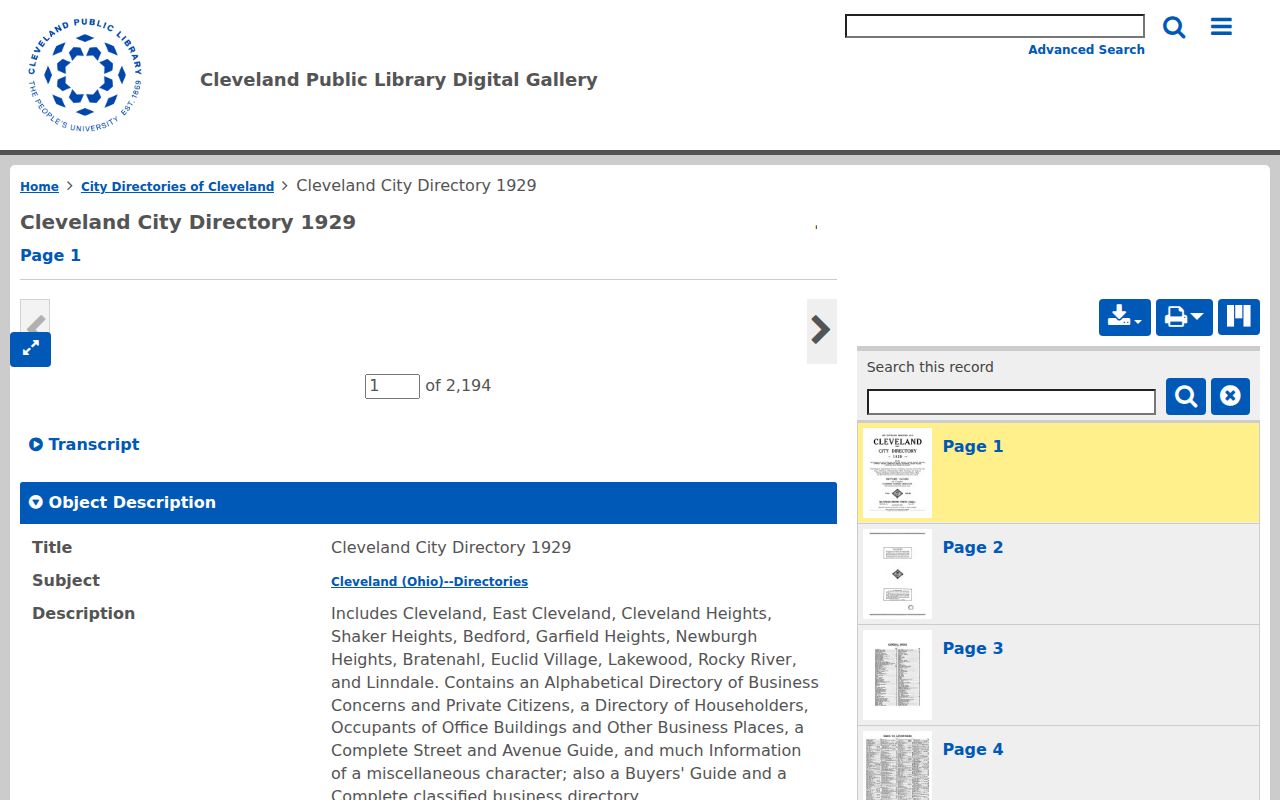
Use the digitized volume to learn the index layout, then compare a surname and address across nearby available volumes rather than treating one year as a complete household history.
Lakewood’s local record history is layered. The City began as part of Rockport Township, later changed names and status, and city organization did not create a seamless directory series. The switch among Cleveland, dedicated Lakewood, and West Suburban books is therefore a useful search map, not just a publishing detail.
Lakewood Directory Changes Over Time
The documented chronology gives a researcher firm handoffs between collections. It also prevents an annual-looking list from becoming a false claim of continuous coverage. Use the date on the title page and note the collection used in research notes.
- Mid-19th century: Cleveland city directories begin, with Lakewood included before its separate local run.
- 1929: Cleveland volumes add an address index, supporting an address-to-occupant search.
- Late 1940s to early 1960s: Lakewood has a distinct directory run; the Cleveland Public Library guide documents editions from 1949 through 1963 with gaps.
- 1970s: Lakewood entries move into the Cleveland West Suburban directories, with the documented editions listed in the collection table.
Note: A collection change or a blank year calls for another source, not an assumption that the family left Lakewood.
Lakewood Directory Reference Shelf
The Lakewood Public Library research collection adds yearbooks, Sanborn maps, census tools, newspapers, HeritageQuest, Fold3, African American Heritage, and in-library Ancestry Library Edition to the directory shelf. The Main Library is at 15425 Detroit Avenue, and the Historical Society identifies its second-floor reference area as the place for bound city-directory volumes. A one-time internet pass is available at either Library branch for visitors who need the public-computer or Wi-Fi route to Digital Reel.
Lakewood Historical Society’s house-history research service connects directory work with deeds, permits, maps, appraisal cards, newspapers, and census material.
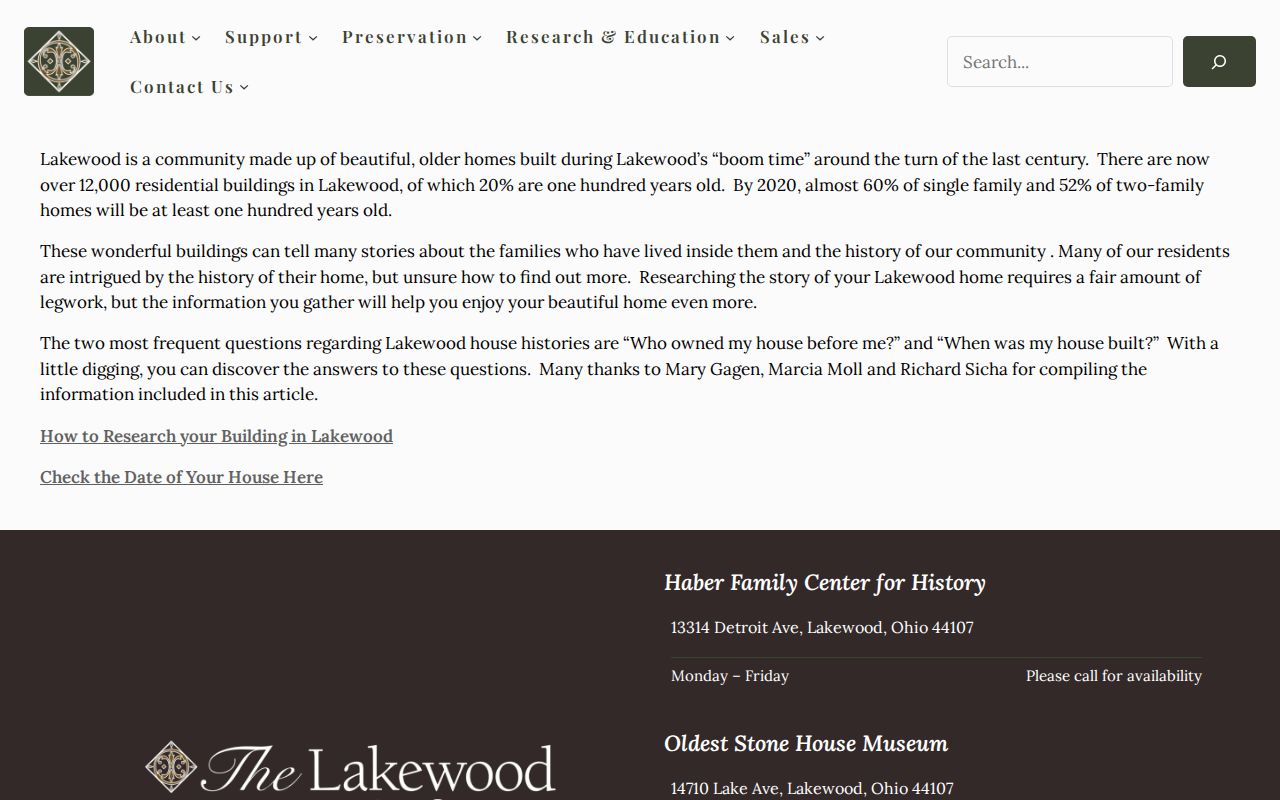
That sequence is useful when an address is known, because a directory result can be checked against materials from the same period without turning it into a modern property claim.
Reading a Lakewood City Directory Entry
A dated directory entry is an index entry, not a biography. The local guide documents a person’s name, street address, and often an occupation. Surname browsing may reveal relatives, students, spouse conventions, or independently listed adult children. Older volumes and newspapers can list a married woman under her husband’s name, so an initial, spouse name, surname variant, and address may each be worth trying. Check the front matter of the exact volume before expanding an abbreviation.
| Name | Listed person, initials, or a spouse-based naming convention. |
|---|---|
| Street address | The dated address associated with that entry; it is an occupant clue. |
| Occupation | Often included, and useful for separating similar names. |
| Address index | Street-number route available in Cleveland directory volumes beginning in 1929. |
| Household clues | Surname browsing can expose relatives, students, and independently listed adults. |
- Criss-cross directory
- An address-ordered section that lets a researcher begin with a street number and find the listed occupant for that dated volume.
- Householder index
- An index organized around household or address listings rather than a narrative family record.
- Abbreviation key
- The volume’s front-matter guide for its own shortened terms. Read it before guessing what an occupation or address mark means.
Lakewood City Directory Occupants and Owners
A directory listing identifies an occupant, not necessarily the owner of the parcel. That distinction is especially important when an address was not owner-occupied. The Cuyahoga County Fiscal Officer’s MyPlace property search can provide current parcel, owner, transfer, tax, permit, and map information, while the County’s official records index is the source for recorded property documents. The different record dates and purposes should stay visible in any comparison.
For a modern street-by-street property trail, use the Lakewood by-street directory rather than stretching a historical entry beyond what it can show. When a historical name needs a separate current-record check, the Lakewood resident lookup has the one-person verification angle.
Lakewood Directory Newspaper Trail
Newspapers can supply a date or event beside a directory address. The Historical Society guide recommends searching a Plain Dealer archive with the street number and street stem, leaving out endings such as Ave., St., or Dr. Cleveland Public Library provides Plain Dealer Historical for 1845–1991, with remote access requiring a library card according to the local guide. Cuyahoga County Public Library has a similar card-gated route. For notices, the free Cleveland Public Library News Index supports surname, first name or initial, and address searches.
Lakewood Public Library’s Digital Reel adds the Sun Post from 1917 through 2017. Search an address and a narrow date after locating a directory line. A notice may support a move, death, club activity, or event date, but it should not be treated as a substitute for a certified record when one is required.
Lakewood City Directory Street Images
A historical image can check whether a street scene, building form, or development stage fits the year of a directory entry. It cannot identify every resident of that street. Lakewood’s local digital collection is unusually large, with more than 4,000 Lakewood Historical Society and Cleveland State images spanning early twentieth-century scenes to the early 1990s, plus a Street & Subject Index.
Yesterday’s Lakewood provides the searchable image collection and its Street & Subject Index.
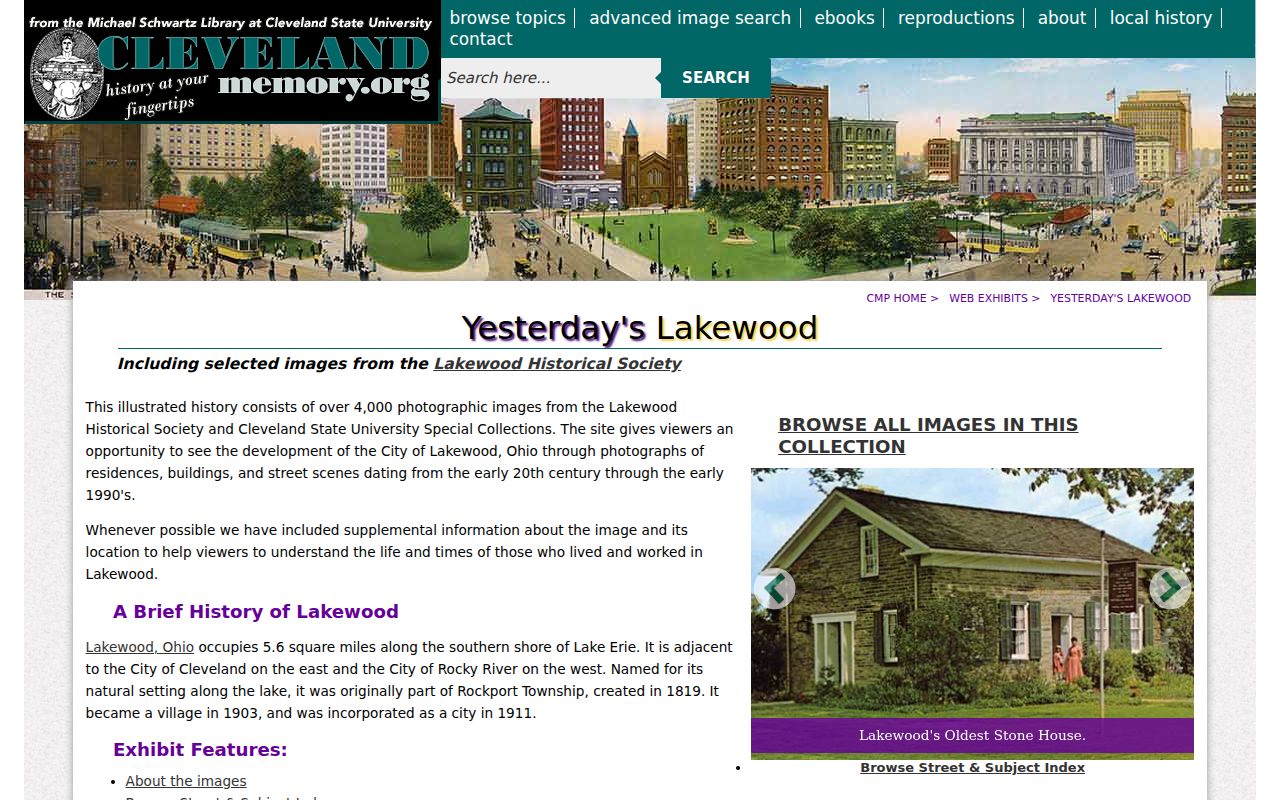
Use the archive as visual corroboration beside a directory date and address, then retain the directory and archival citations separately.
Trace a Lakewood City Directory Household
Following a household works best when each directory year is kept in sequence. Start with the earliest confirmed name or address, capture the wording exactly, and follow it through the available books. Directories offer annual or near-annual snapshots between federal census years. Census schedules add relationships that directories often omit. The local guide notes the loss of the 1890 census, so nearby directory volumes become especially valuable when that gap affects a family question.
- Find the first available Lakewood or Cleveland directory entry for the surname, initials, spouse name, or address.
- Record the volume year, spelling, address, and occupation, including any shift in a name form.
- Check the next available directory years and use the address index from 1929 forward when the household moves.
- Pair a dated directory address with the nearest released census schedule, which reaches 1950 under the National Archives release rule.
- Use the Sun Post, Plain Dealer route, or News Index to look for a date-bound notice when the directory trail changes.
A disappearance can mean a move, a death, a listing omission, or a gap in the run. It is a reason to compare sources, not a conclusion by itself.
Lakewood Directory Archive Requests
When the Library shelf does not answer the date, Cuyahoga County Archives adds directories, maps, tax material, appraisal cards, election lists, naturalization-voter indexes, marriage indexes, estate files, and property sources. Property research requires an appointment. A mail or email request works best with the record type, surname, date, and a known citation. Archives guidance says a detailed request can take three weeks, and the first 40 photocopies are free before a per-copy charge applies.
Lakewood Historical Society’s local-history files include churches, clubs, courts, elections, homes, maps, newspapers, occupations, and real estate.
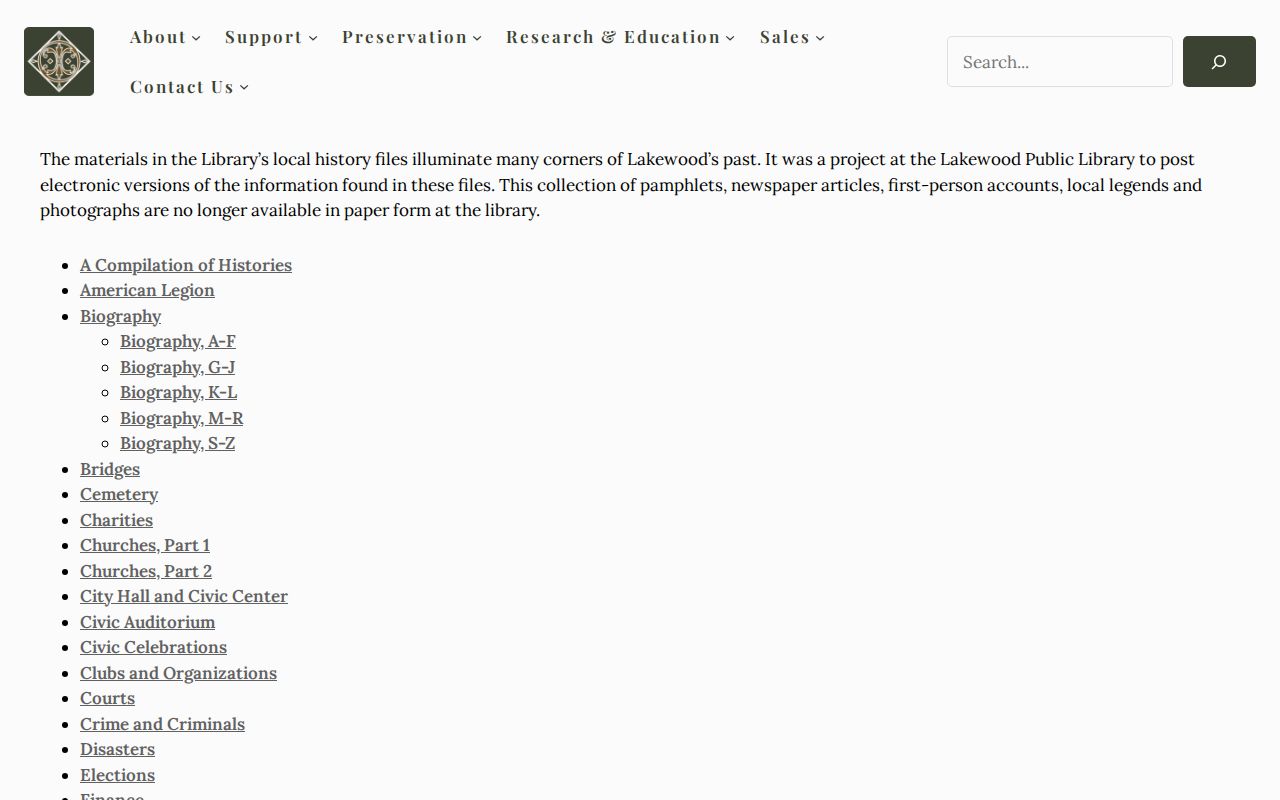
Those files can help explain a directory address or organization, but they are not a verified current resident list.
Note: Archive and Library staff can direct a search to the right collection, while the dated directory entry remains the record to cite.