
Lakewood Previous Residents by Era
Past residents leave different kinds of evidence at different points in a Lakewood address history. Start with the parcel and the transfer trail when the question concerns an owner. Then use the Recorder, map collections, directories, permits, notices, and released census schedules for the time period that follows. The key is to preserve the address exactly as written, the date or volume year, the listed name and role, and the parcel or legal-description match. That makes an owner trail separate from an occupant trail.
| Source | Years It Covers | Where Held | What It Shows |
|---|---|---|---|
| MyPlace Transfers | January 1, 1975 to present | Cuyahoga Fiscal Officer MyPlace | Parcel, transfer dates, grantor, grantee, and related data |
| Official Records deed index | County reports 1810 to present | Recorder online search or counter | Parties, dates, document type, legal description, and images |
| Map Room and Archives | 1940s to 1975 path; earlier maps and tax material | Fiscal Office Map Room and County Archives | Parcel support, owner names, maps, tax, and appraisal context |
| Address-index directories | Address index beginning in 1929 | Lakewood Public Library and genealogy collections | Listed occupant at an address in a dated volume |
| Permit cards and notices | Permits about 1905 onward; notices vary by collection | City Hall microfiche and library sources | Physical-change chronology, obituaries, and address clues |
Use the current parcel record to establish the starting property, then change channels at the documented cutoff instead of forcing older material into a modern web search.
Lakewood Records After 1975
Cuyahoga MyPlace is the practical beginning for a current Lakewood parcel. Select Lakewood under City, then search by owner, parcel, or address. The resulting parcel card can show the parcel ID, owner, situs, transfer link, taxes, building information, permits, map access, and a document list. Its Transfers tab reaches back to January 1, 1975 under the local house-history guide. Record every transfer date, buyer, seller, and the abbreviated legal description before moving backward.
The County marks its map data as an as-is service, not the controlling record. When ownership or boundaries matter, compare the parcel information with the deed image or the office record.
Note: Save the parcel ID and legal description with each transfer, because older street names can change while the parcel does not.
Trace Lakewood Deed Chain
At the earliest MyPlace transfer, move to the Recorder rather than guessing at an old address. Open the deed result, compare its legal description with the parcel description, and record the parties and recorded date. Then search the buyer as a prior grantee to find an earlier purchase. The local guide warns that a result set can include mortgages and releases, so check document type. A deed may use nominal consideration, which should not be treated as the actual price.
- Find the parcel ID and abbreviated legal description in MyPlace.
- Record each MyPlace transfer through the January 1, 1975 baseline.
- Use the earliest buyer or seller in the Official Records index and open the likely deed.
- Match the legal description, document type, recorded date, and parties before adding it to the chain.
- Repeat with the earlier grantee, then shift to Map Room and Archives sources when the record era requires it.
- Grantor / grantee
- The grantor is the party transferring an interest. The grantee is the party receiving it.
- Chain of title
- A dated sequence of recorded transfers for the same property, checked document by document.
- Legal description
- The subdivision, lot, section, or similar land description that identifies the parcel more reliably than an old street address.
Lakewood Recorder Search Fields
The Official Records Advanced Search supports a narrower Lakewood chain than broad name searching. Party Names, Grantor, Grantee, recorded or instrument date ranges, document type, parcel ID, property address, and legal-description fields can each narrow a result. Party input uses the format LASTNAME FIRSTNAME, with Enter to insert the party. Dates use MM/DD/YYYY, and a parcel ID includes dashes.
| Grantor / Grantee | Use the party role and LASTNAME FIRSTNAME format to step through transfers. |
|---|---|
| Recorded Date | Use a date range or a decade filter to separate common names and repeat transactions. |
| Parcel ID | Enter the identifier with dashes, then compare the deed to the parcel description. |
| Document Type | Confirm that a result is a deed rather than a mortgage, release, lien, or related filing. |
Opened results can show parties, document type, recorded date, a property-address column, and a free image download. The Recorder’s stated document range is 1810 to present.
Note: Index results identify possible documents; the deed image and legal-description match determine whether a result belongs in the chain.
Lakewood Past Resident Myth
An address line in a directory is not the same as an ownership record. Lakewood’s house-history guidance treats a directory as evidence that a person was listed as an occupant in that volume. It may name an adult at the address and often give an occupation, but it does not establish current residence, every household member, or ownership. Compare a directory line with the parcel and deed chain before assigning a role. This small check prevents a dated clue from becoming a false claim about the property.
The documented address index starts in Cleveland directory volumes in 1929. For the local run, Lakewood entries move from Cleveland books to separate Lakewood directories from the late 1940s into the early 1960s, then to Cleveland West Suburban books in the 1970s.
Lakewood Past Household Flow
Use directories and census material as dated household evidence, not as a continuous roster. Lakewood Public Library research resources include yearbooks, newspapers, census tools, Sanborn access, and in-library genealogy databases. A directory can fix an address and year, while a released census schedule can add household relationships. The 1890 federal census loss leaves a real gap, so a missing line does not establish absence.
- Find the address in the directory index for the closest available year.
- Record the name, address spelling, and year as an occupant clue.
- Pair that year with the closest released census schedule and compare the household carefully.
- Use newspaper, probate, or directory evidence to bridge a gap rather than assuming a household change.
Directory collection details remain with the Lakewood City Directories, while this trail uses a volume only to anchor one address through time.
Lakewood Permit Card Dates
Permit microfiche adds a physical-change timeline to the address trail. The local guide says Lakewood cards begin about 1905, remain in the City Hall basement, and require an appointment. A card can document original work, additions, remodeling, or a garage. It does not establish everyone connected to the address. For another dated property layer, Cuyahoga Archives holds appraisal cards often dated 1944, 1952/53, and 1964, which can include value, dimensions, features, an occasional photograph, or a purchase note.
Note: A permit or appraisal card dates work or a property feature; it should not be treated as a household record.
Lakewood Street Alias Trap
Older address work can fail when the street label changes. Lakewood Historical Society records that Kirtland Avenue became Bunts Road. Preserve the parcel ID and legal description before searching an older directory, map, or deed. Lakewood’s City history also matters: nineteenth-century sources may be filed under Rockport Township, East Rockport, Cleveland-related, or later Lakewood headings. A modern address result is a starting point, not proof that earlier records used the same name or numbering pattern.
Lakewood Previous Residents Notices
Newspaper notices and Probate can close a dated trail after a person leaves an address or dies. Plain Dealer Historical covers 1845 to 1991 through card-gated library routes. The free Cleveland Public Library News Index and Necrology database supports surname, first-name or initial, and address searching for notices from the nineteenth century to the present. A notice is a lead to a date and context, while a Probate docket can identify a public case role that still needs court verification.
The Cleveland Public Library News Index is shown below.
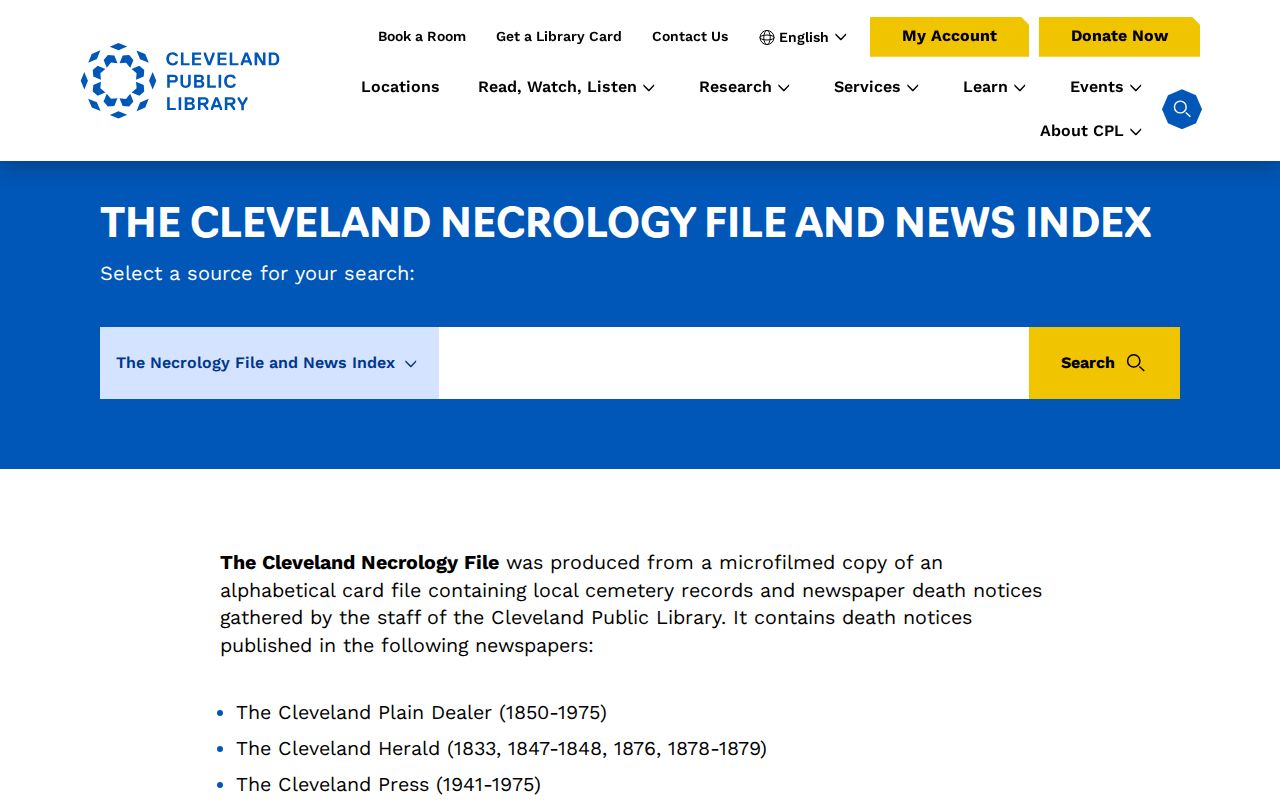
Use an address or name variation to locate a notice, then retain its publication date alongside the directory and parcel evidence.
Lakewood Archives Research Tip
When the online trail stops, make the archival request precise. Cuyahoga County Property Research directs earlier deeds, maps, tax records, and in-person work by era. The Archives asks a mail or email researcher for the record type, surname, date, and any known volume, page, or petition number. A detailed request can take up to three weeks, and the first 40 photocopies are free. Bring the parcel number when asking about appraisal cards or maps.
Note: The documented channel changes at the era boundary, so a missing web result should lead to the proper counter or archive route.
Lakewood Historical Death Routes
Death sources can add a date to an address timeline, but their access and scope differ. Ohio History Connection’s free Death Record Index includes Ohio Department of Health deaths for 1913–1944 and 1954–1970. It holds certificates from December 20, 1908 through 1970, but cannot issue certified copies. Lakewood’s local vital office and the State office handle certificate requests through their own channels.
Ohio History Connection’s Death Record Index is shown below.
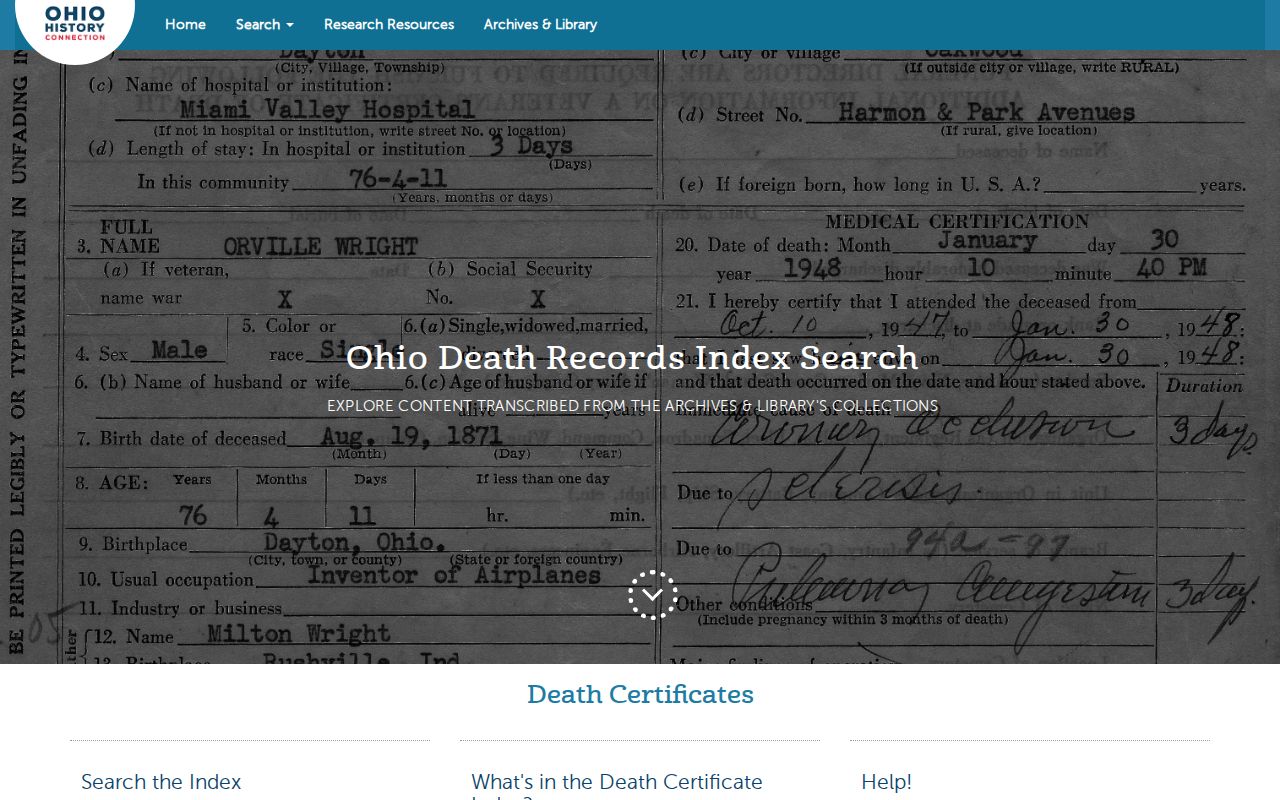
An index hit identifies a historical lead. It does not replace a certified copy or confirm a whole household.
The Ohio Department of Health Vital Statistics route is also shown below.
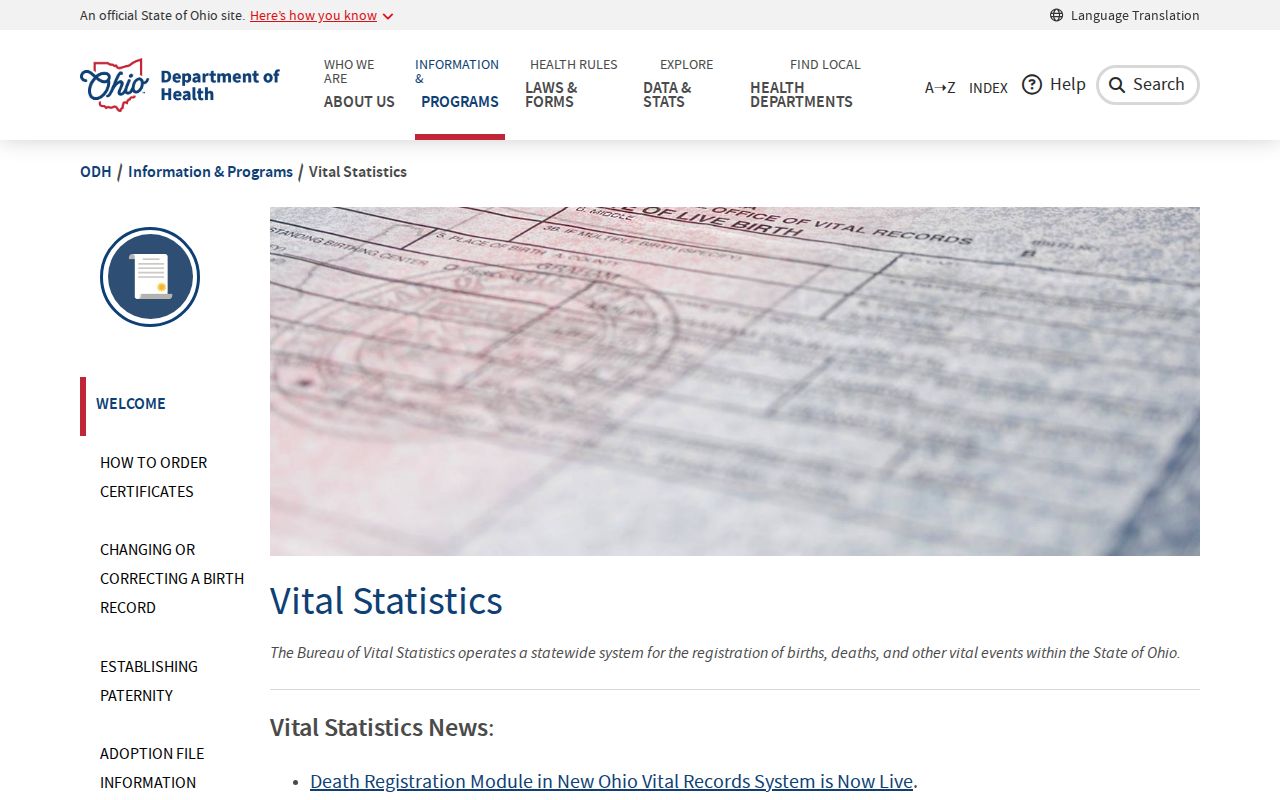
Use the custodial route for the type of copy needed, and keep the event date separate from an inference about an address.
Lakewood Previous Residents Limits
Past residents are best described by the source and date, not as a complete answer about a property. A tax mailing address is correspondence information, not proof that a named party lived at the physical parcel. A directory entry is an occupant clue, while a deed and parcel record support an ownership relationship. City-held records can be requested through the responsible department or Lakewood NextRequest, but a request should identify the record group, date span, and address rather than ask for new research.
Ohio public-record access still includes redactions and statutory confidentiality. If a record appears incomplete or factually wrong, contact the custodian that maintains it. Do not use a no-result to make a claim about a living person.
Lawful use. Use Lakewood address history for personal, family-history, estate, or civic research. Never use records to stalk, harass, intimidate, or harm another person.