
Lakewood Neighbors by Parcel
Lakewood neighbors are not listed in one public block directory. Begin with the parcel because it anchors a physical place. MyPlace can show the parcel ID, situs address, owner field, and property tabs. A deed can identify recorded parties for that parcel. A historical directory may identify a listed occupant in a stated year. The voter route can confirm a searched person where public, but it is not a block finder. Each source answers a different question and leaves important gaps.
| Block source | What it can show | Access and limit |
|---|---|---|
| MyPlace map and parcel record | Adjacent parcel locations, physical address, owner field, tax and property links. | Public map and parcel search; it does not establish a complete household. |
| Recorder deed record | Recorded owner-party trail, dates, legal description, and related filings. | Search by party, parcel, address, or legal description for a selected property. |
| Dated address directories | A listed occupant at a particular address and publication year. | Repository and historical access; not a current roster. |
| Ohio voter systems | Individual registration or a date-specific Cuyahoga snapshot where public. | Protected records and statutory exclusions apply; not a block lookup. |
| Community resources | Named neighborhood or merchant-association context. | No public household or member roll was verified. |
A parcel owner, a tax-mail recipient, and a directory occupant can be different people. Label each result by source and date rather than calling it proof of who lives on the block now. Lakewood neighbors research is strongest when it reports the property relationship first and leaves household identity to a source that actually states it.
Map a Lakewood Block
The narrow, documented method begins with one address in Cuyahoga MyPlace. Select Lakewood in the City field, search or map-click the starting parcel, then use View Map to pan and zoom. The displayed instruction is to zoom in and click a parcel for more information. Work one adjoining parcel at a time. The research does not verify an automatic radius, buffer, or adjacent-parcel selection tool, so do not claim one exists.
- Open the starting parcel and record its parcel ID, situs address, owner field, and source date.
- Choose View Map, zoom to the parcel edges, and click one adjoining parcel.
- Open that parcel’s record and retain only its parcel, situs, owner field, and any distinct tax-mail field.
- Repeat for the immediately adjoining parcels, keeping unknown occupancy unknown.
- When research needs an entire named road, use the fuller chain on the Lakewood street directory.
This is a parcel-to-parcel process, not a method for exporting a presumed neighbor list. The County’s map data is provided as-is, so a disputed fact should be checked against the Recorder image or office record.
Lakewood Neighbors and Tax Mail
A tax mailing address is correspondence information, not proof that someone lives at the physical parcel. The situs address is the property itself. The mailing field can belong to an owner, trust, business, attorney, or another recipient elsewhere. The same caution applies to a historical directory: it can identify an occupant for its own year, but not necessarily an owner or current resident. This distinction prevents a common false claim about Lakewood neighbors.
Keep the situs, mailing address, parcel number, and any dated directory entry as separate fields in a source log. MyPlace is a strong starting point, but its map display does not replace the controlling deed or office record when ownership or a boundary is contested.
Note: A different tax-mail address can be useful context, but it should never be presented as a household location.
Lakewood Neighbor Deed Trail
Once a selected parcel is anchored, the Recorder’s Advanced Search can narrow the owner trail by Party Names, Grantor, Grantee, recorded or instrument dates, parcel, property address, and legal-description fields. Match a deed’s legal description to the MyPlace parcel before treating it as the same property. A party search can also return mortgages, releases, liens, or plats, so document type matters. The County says its indexed filings reach from 1810 to the present.
For older block context, use the Cleveland directory address index from 1929 onward, then read the exact volume’s date. Lakewood’s separate directory run covers the late 1940s into the early 1960s, while West Suburban volumes carry Lakewood listings in the 1970s. A dated address entry is evidence of a listed occupant, not a present-neighbor claim.
Insider tip. Compare a dated directory occupant with the parcel and a legal-description-matched deed before treating a Lakewood address as owner-occupied.
Lakewood Neighborhood Community Context
LakewoodAlive identifies community geography that can help place a block without turning it into a membership directory. It names West End, Birdtown, and Uptown, and acts as fiscal sponsor or partner for their related merchant associations. Those named areas are useful for local context. They do not show which households belong, attend, or support a group.
West End
Anchored along Detroit Avenue and Sloane, with the WE Lakewood merchant association.
Use as corridor context, not as a resident list.
Birdtown
A nationally registered historic district near Madison Park, linked with the Bunts to Birdtown merchant association.
Its named district is geography, not membership evidence.
Uptown Lakewood
Along Madison from Warren to Hilliard, with an Uptown merchant association.
Use the corridor to orient an address, not to infer participation.
The LakewoodAlive neighborhood resource is the source for this Lakewood neighbors image.
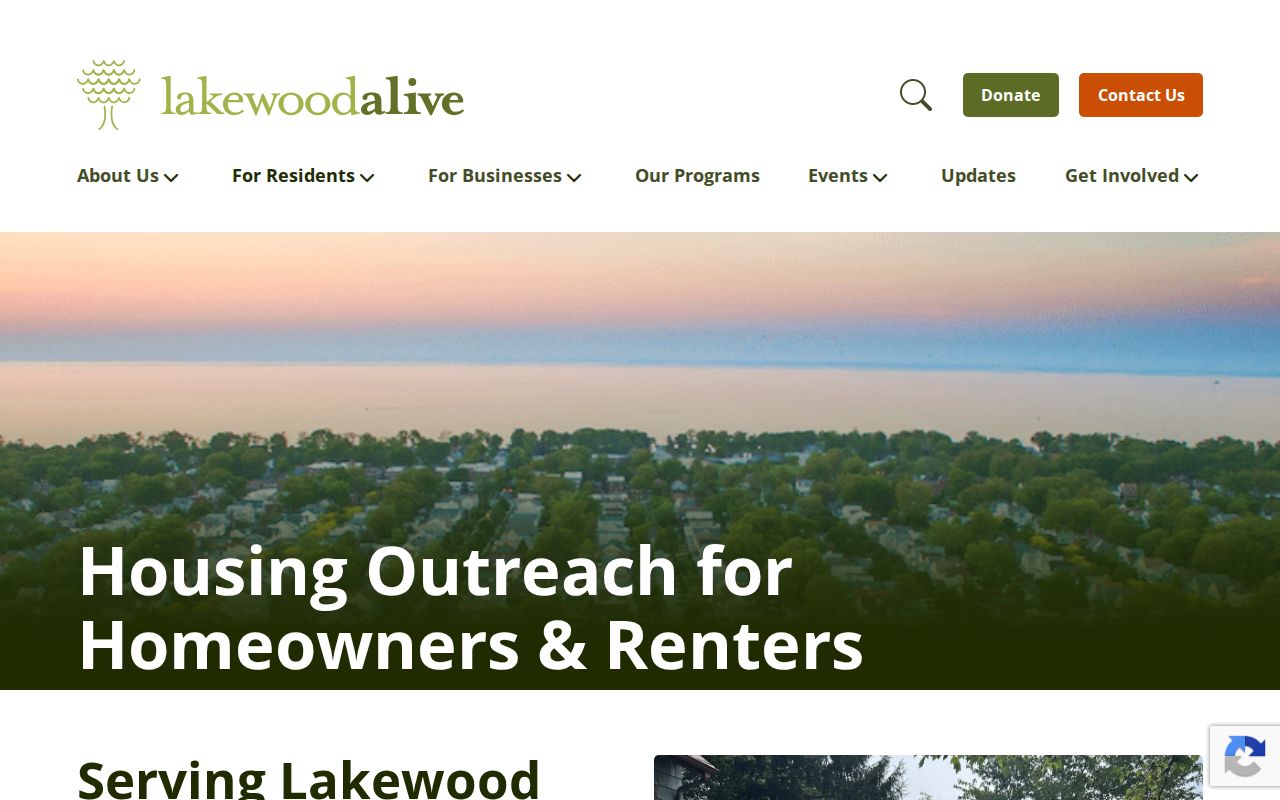
The community layer gives a block historical and civic setting, while parcel and deed records remain the sources for property facts.
Lakewood Block Clubs and Parties
Lakewood Police lists Block Clubs as a community resource, and the City’s block-party process confirms that some civic activity is organized at a street-block scale. The process is not a directory. On a street without a party in the prior three years, the City requires approval signatures from 60 percent of residences. Those administrative contacts and signatures are not a target for neighbor research.
Several primary streets, including Madison, Franklin, Hilliard, Detroit, Clifton, Lake, Bunts, and Warren, are excluded from the permit route. Use the City’s block-party information only to understand the community process, never to identify participants.
Lakewood Neighbor Voter Limits
Ohio’s voter lookup confirms registration information for a searched person, not everyone near an address. It requires first name, last name, and county; a Street Name control may narrow a result. Children, unregistered eligible people, noncitizens, inactive or cancelled registrations, and protected participants can be absent. A no-match does not prove that a person is not a Lakewood neighbor.
Safe at Home participants can receive confidential voter-registration treatment, and a public-record request cannot bypass an express confidentiality statute. For a lawful question about a voter file, precinct, or record status, contact the Cuyahoga County Board of Elections rather than trying to construct a block roster.
Lakewood Official Source Comparison
Official sources identify what they hold and what their records cannot establish. Commercial neighbor-search categories may combine public and other data, but their underlying source date, identity match, and update method can be unclear. For a Lakewood block, use the official record that fits the question and keep its stated limitation with the result.
| Research route | Useful result | Important boundary |
|---|---|---|
| Official parcel and deed records | Property, recorded parties, and legal-description evidence tied to a selected parcel. | Owner field and tax mail do not establish every occupant. |
| Official voter route | Registration confirmation for a searched person where public. | It is not a street or block roster, and exclusions apply. |
| Commercial neighbor-search category | May offer a starting lead to verify independently. | Do not treat it as a custodian record or a complete, current household list. |
The Ohio Department of Rehabilitation and Correction offender-search source is shown in this Lakewood neighbors image.
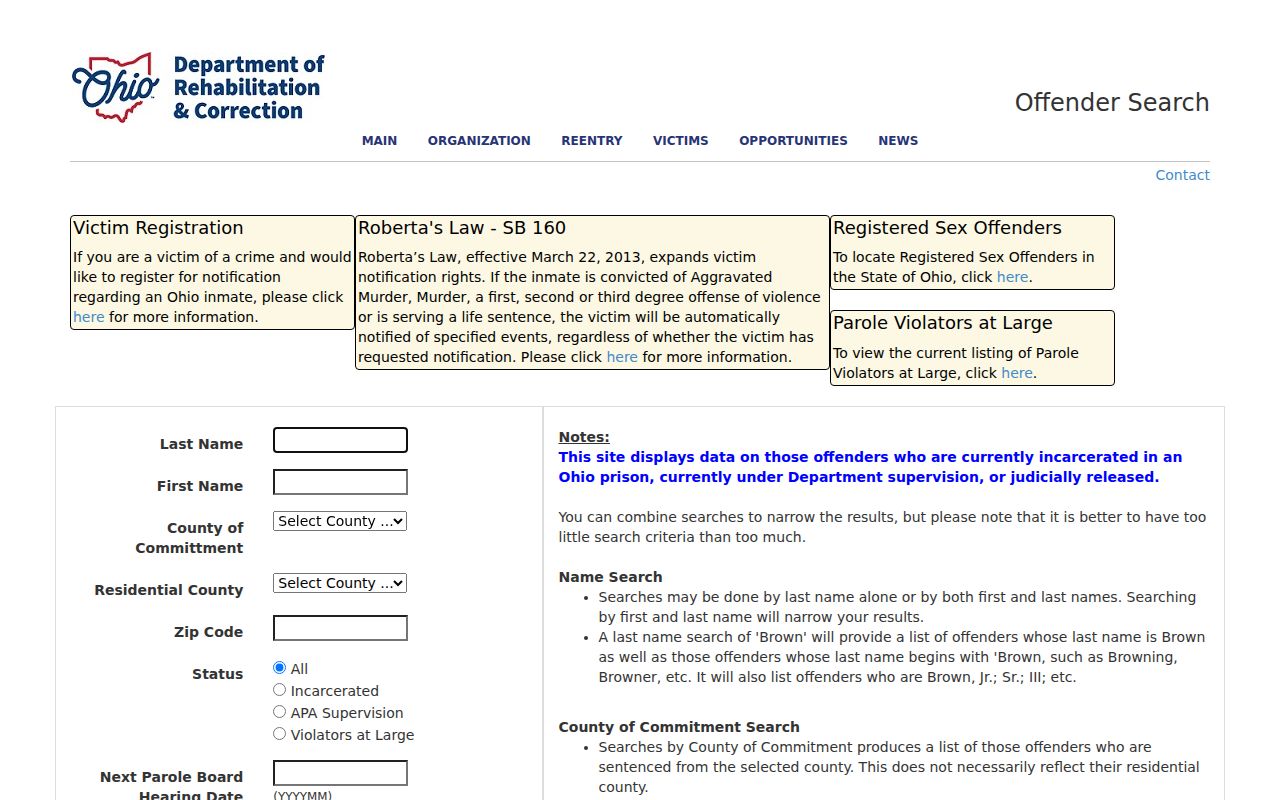
It is a distinct state-record category, not a parcel map or a neighborhood roster. Never use it to infer a complete list of people around an address.
Lakewood Neighbor History by Date
A block changes over time, so older findings need an era-specific source. The 1929-and-later address index can supply a dated occupant clue. A matched deed can supply a recorded owner trail. For earlier context, Cuyahoga County Archives holds original maps from 1860 through 1945, tax records from 1819 through 1986, and appraisal cards often dated 1944, 1952/53, and 1964. Use the source year beside every name and leave a parcel unknown when the evidence does not connect.
For appointment-based property research, start with the address or parcel and use the County property-research instructions. The Map Room supports more modern original maps by counter or phone, while Archives is the depth route for its historical material.
Note: A current map cannot be projected backward without a dated directory, deed, map, tax, or appraisal source.
Lakewood Neighbor Privacy Limits
Some information remains private or deliberately incomplete. A parcel record does not prove every resident. A directory line is dated. Utility customer lists and motor-vehicle personal information are not public alternatives. Ohio’s Safe at Home program protects qualifying addresses, and voter data excludes specified personal information and confidential registrations. An absence from a public-facing source can be intentional protection, not a missing research step.
For a concern about a County parcel or recording, begin with the Fiscal Officer or Recorder. For a City-held record, use the custodian that created it. Lakewood accepts identifiable public-record requests through its portal, in person, by phone, and in writing or email, while redaction may precede release. A correction request does not remove an accurate public record.
The Lakewood public-records policy is the source for this Lakewood neighbors image.
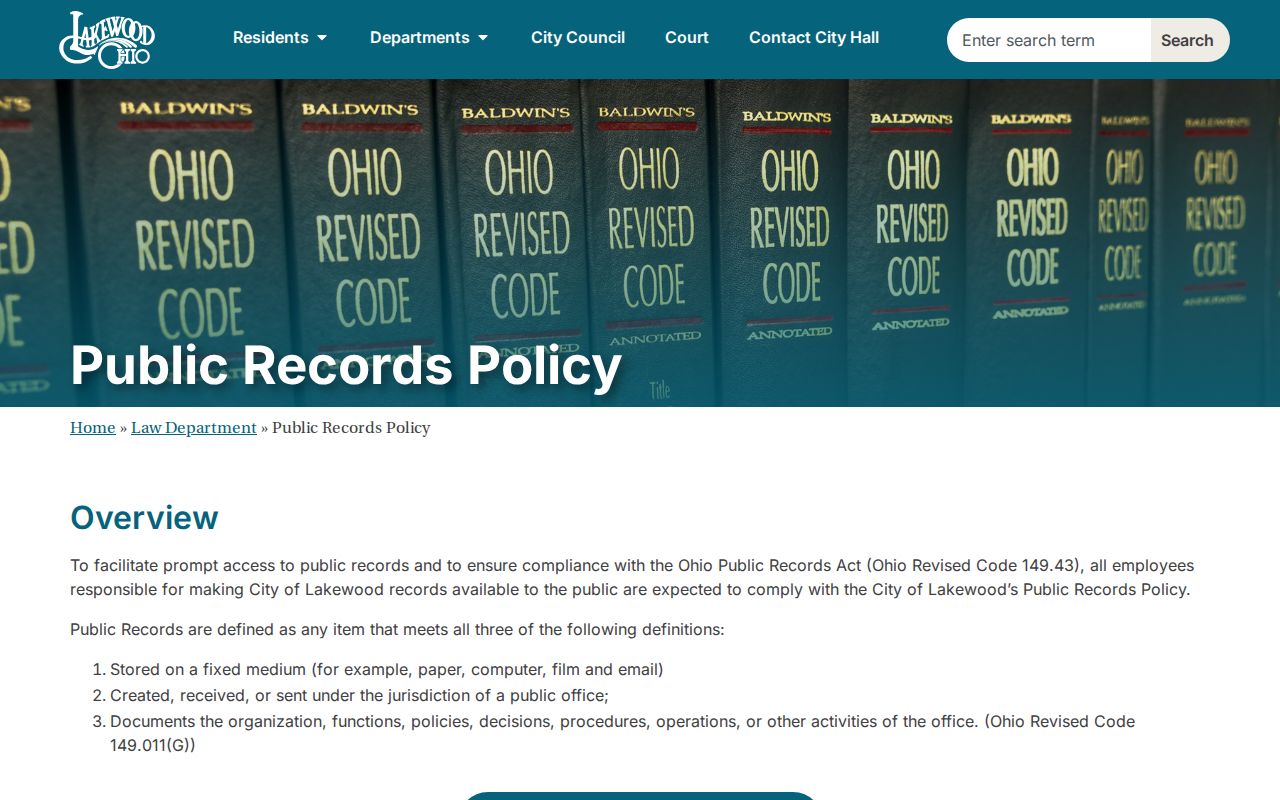
The policy provides a route for a specific retrievable City record, not permission to collect private household information.
Lawful use. Lakewood neighbor research is for lawful personal inquiry and civic context. Never use records to stalk, harass, intimidate, or harm anyone.