
Lakewood Resident Lookup Records
Good lookups ask one narrow question at a time. Cuyahoga MyPlace links an owner or a physical address to a parcel and its transfer history. The Official Records Search pairs deed parties with a filing. Neither one proves a named party still lives at the parcel. Dated directories, court dockets, voter registration, vital records, and affiliation searches each cover a different part of the question. An occupant is not always the owner. A docket name is not always a Lakewood resident.
| Record | What It Can Confirm | Custodian or Route | Access Path |
|---|---|---|---|
| Parcel and deed records | Property relationship, transfer, deed parties | Cuyahoga Fiscal Officer | Online lead, then deed or counter verification |
| Dated directory | Listed occupant, address, and sometimes occupation for one year | Lakewood and Cleveland collections | Historical shelf, microfilm, or selected digital access |
| Public court record | Named party in a particular proceeding | Municipal Court, Common Pleas, or Probate | Index and clerk, subject to restrictions |
| Voter registration | Registration, precinct, and polling information for a searched person | Ohio Secretary of State and Cuyahoga Board of Elections | Official lookup with statutory exclusions |
| Vital or affiliation record | Certified event record, credential, or filing role | Lakewood Vital Statistics, Ohio eLicense, or Secretary of State | Request or official lookup, not residence proof |
Match the record to the fact in hand. A parcel or deed fits a property question. A case number belongs with its own court. Date-bound directory entries belong in the historical trail, with fuller collection context in the Lakewood City Directories.
Lakewood Court Lookup Routes
Pick the court by the proceeding, not the person. Most local traffic, misdemeanor, civil, small-claims, and ordinance matters go to Lakewood Municipal Court. CaseLook offers its record search, hearing calendar, and warrant-list entry point. Filters include day, month, year, attorney, and official. Common Pleas handles county felony, civil, domestic-relations, and appellate matters. Probate covers estates, guardianships, marriages, name changes, and wills. Federal cases go the federal route.
The Lakewood Municipal Court home page is shown below.
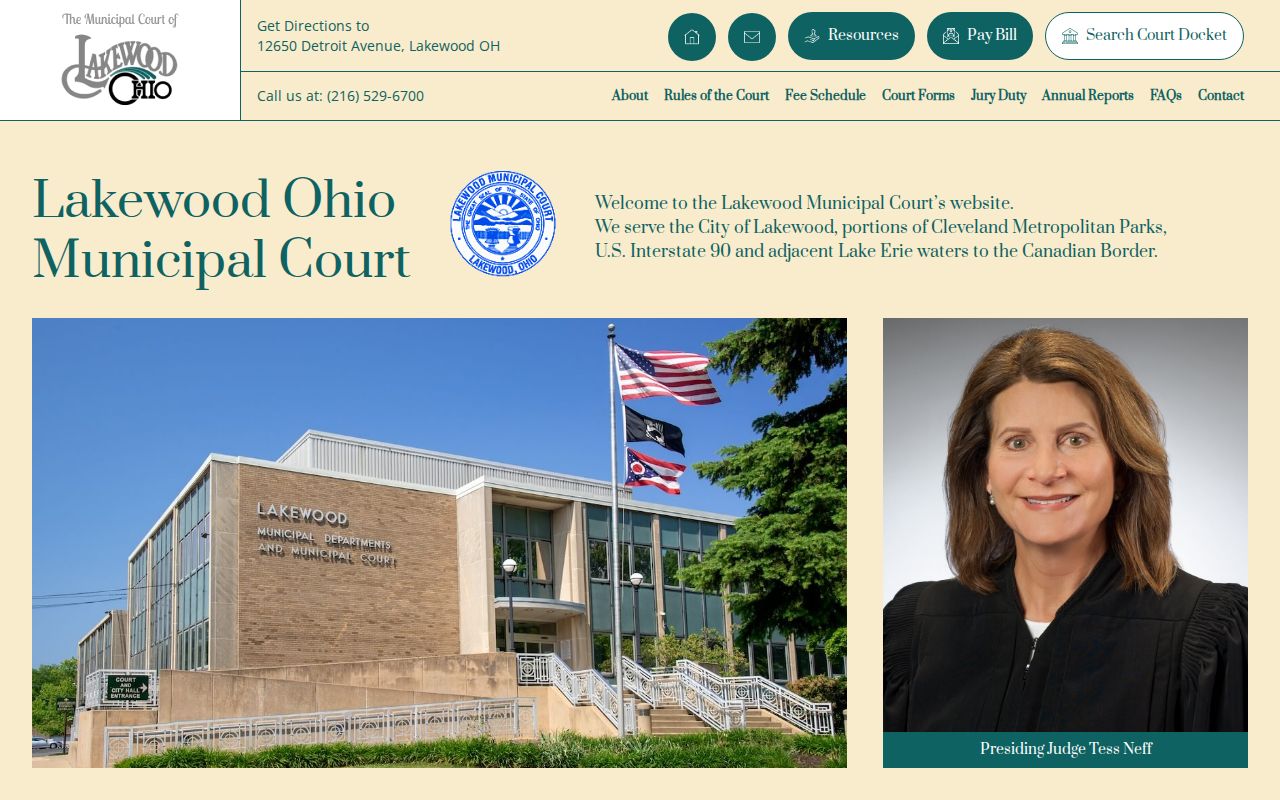
Use the local court route when the case type and jurisdiction fit Lakewood, and confirm each case with the clerk. The Cuyahoga Common Pleas docket search is the county-level route.
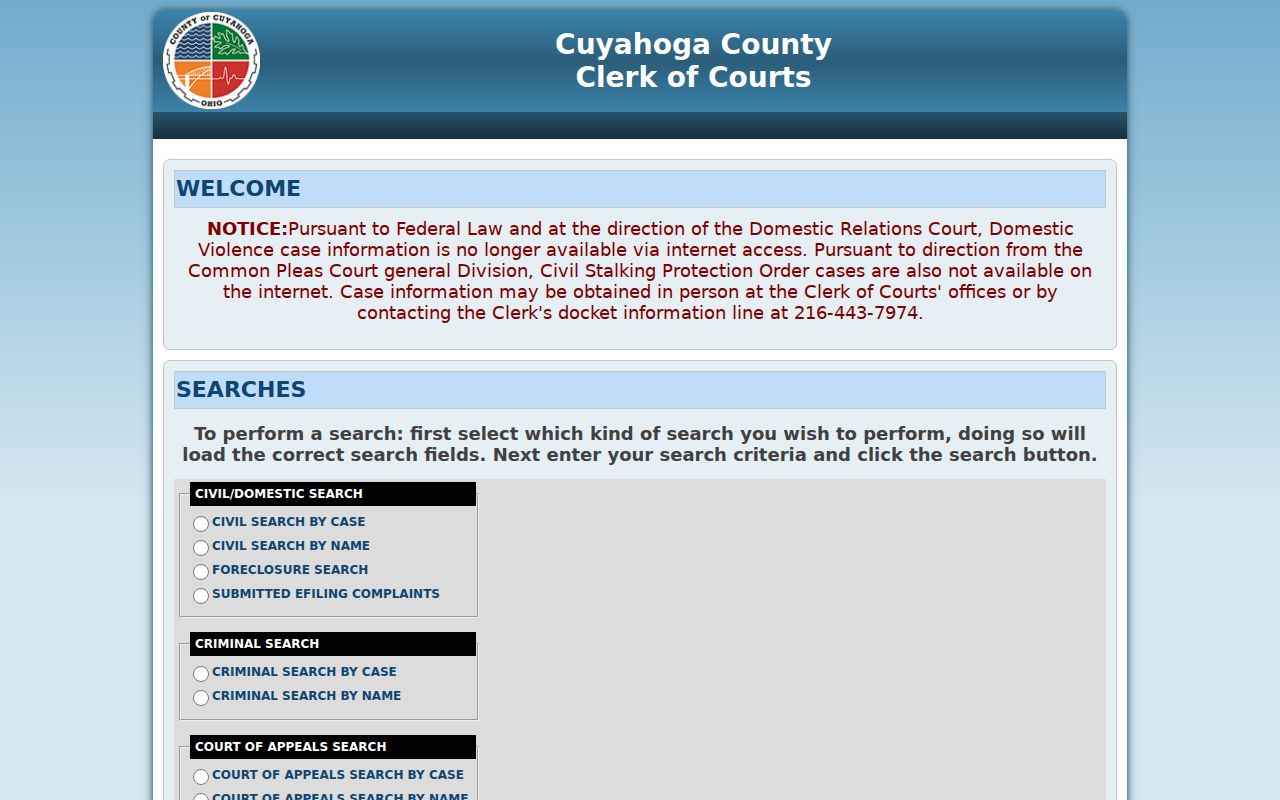
Separate routes cover civil, criminal, foreclosure, complaints, and appeals.
Verify Lakewood Resident Records
Two independent facts make a match. A surname or street number alone proves little. Match a parcel legal description against the deed parties. For a court entry, check the party role, court, case number, date, and public disposition together. Keep a log of initials, former surnames, spelling variants, and older spouse-name conventions. The clerk sits at 12650 Detroit Avenue and handles case-record requests. Non-certified photocopies run $0.10 per page. Certified journal or judgment entries cost $20, and digital courtroom audio costs the same.
- Anchor the name to a parcel, dated directory entry, or other record that identifies the time period.
- Match a relevant deed by its parties and legal description, not a name alone.
- Search the court with the name variants and confirm the court, party role, case number, and case facts.
- Ask the record custodian for a certified copy only when an official copy is actually needed.
- Docket
- A court’s running list of filings, hearings, and actions in one case.
- Index versus image
- An index points to a record. An image is the scanned document, which may have separate access or redactions.
- Certified copy
- A custodian-issued copy authenticated for an official purpose, unlike an ordinary research printout.
The Lakewood Municipal Court contact page shows the clerk and division contact route.
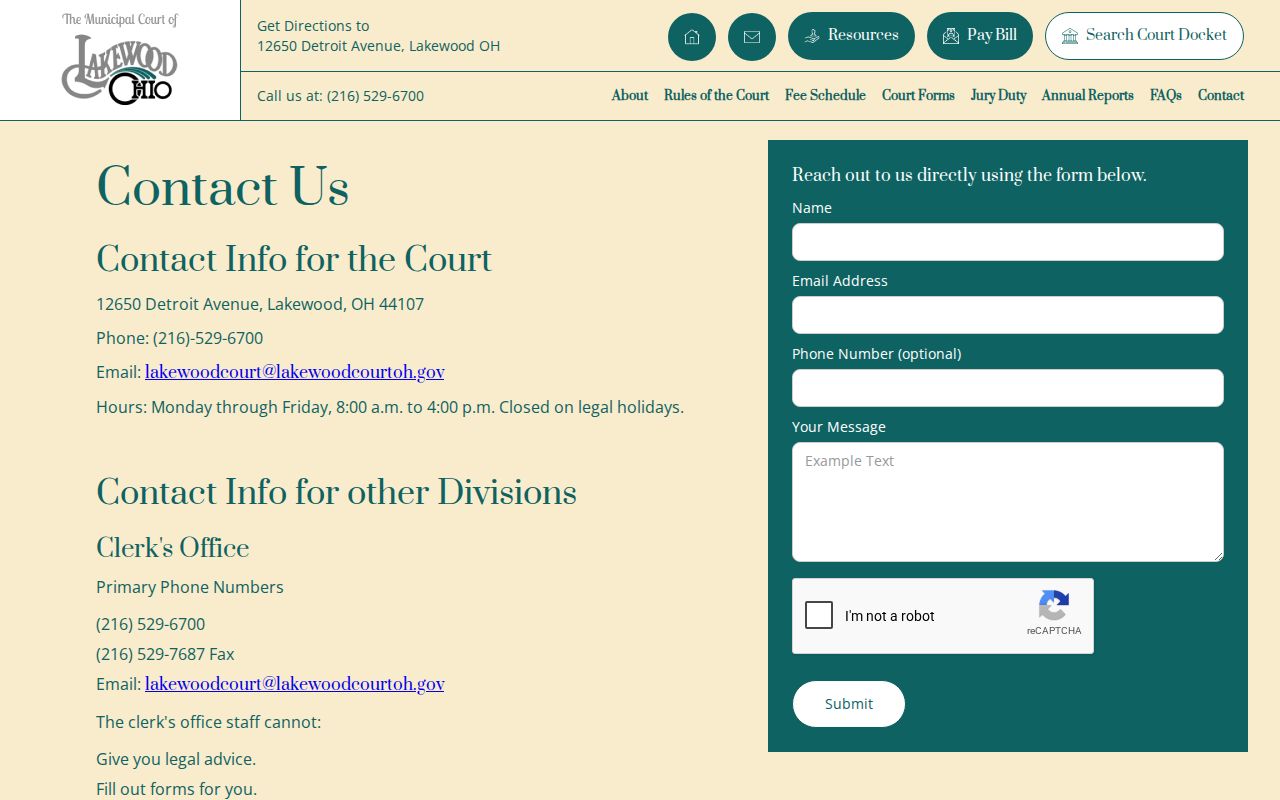
Skip the City's general public-record portal. Case-record requests belong with the court clerk. Note: A matching name is a lead, not a confirmed identity, until independent facts line up.
Lakewood Probate Role Search
A Probate hit can reveal someone's public role in an estate, marriage, guardianship, name-change, or will matter. The Cuyahoga Probate docket opens only after you accept its terms. Its party search separates people from companies. Search fields cover first, middle, and last name, suffix, party role, case year, and case category. Results list a name, number, address, role, and alias. The summary can add case type, filing date, judge, case status, and status date. A deposited will stays private until reviewed or admitted. The Probate docket and index search is shown below.
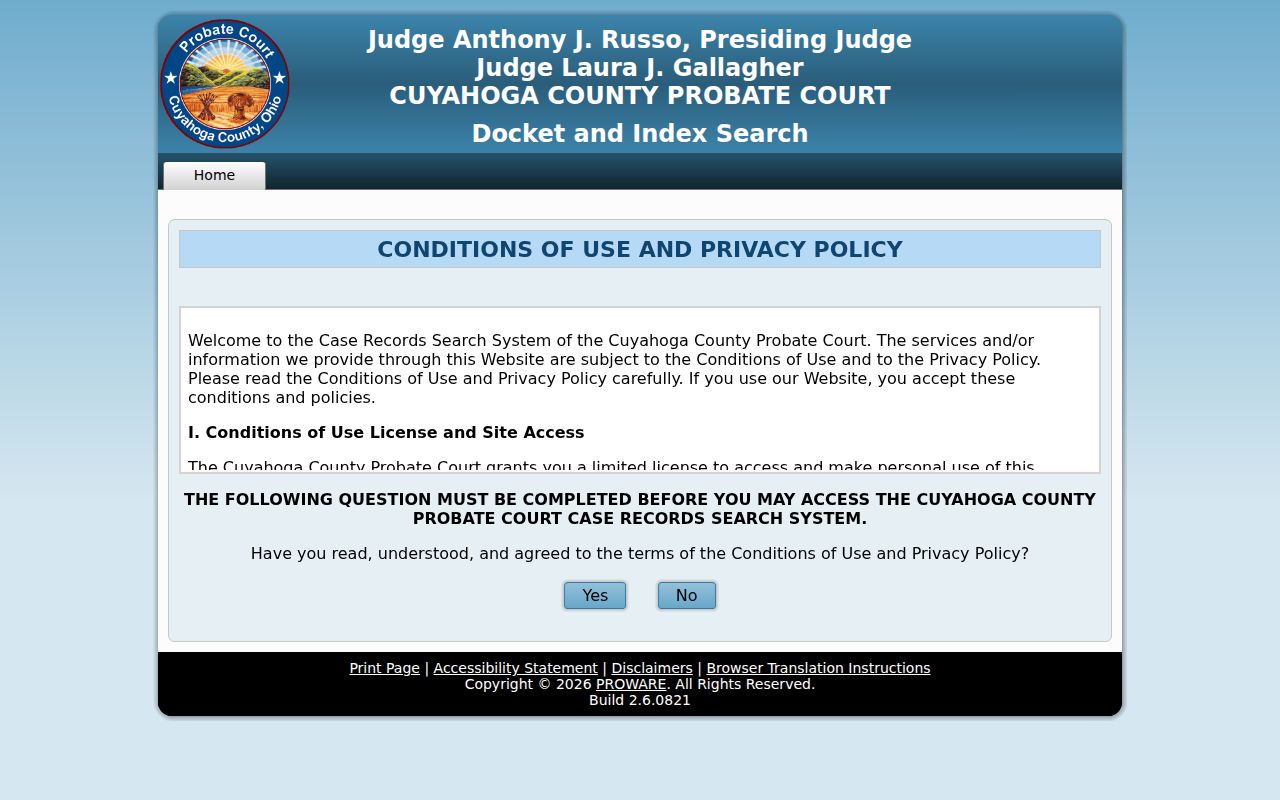
For a non-marriage case filed before 1975, the court directs researchers to contact it directly. A docket entry alone is no heir list.
Lakewood Voter Lookup Limits
The Ohio voter lookup confirms a registration you already suspect. It is not a household roster. First name, last name, and county are required. Pick Cuyahoga for Lakewood. A street name can narrow results afterward. Registration, precinct, and polling details may appear, though ballot choices never do, and local record questions go to the Cuyahoga County Board of Elections.
| First Name | Required text field for the registration search. |
|---|---|
| Last Name | Required text field; a derivative first name or former surname may help. |
| County | Required dropdown. Select Cuyahoga for Lakewood. |
| Street Name | Conditional narrowing field after a search. |
Safe at Home and similar statutory exclusions can keep a valid registration out of public view. A no-match proves nothing about registration or residence.
Lakewood Vital Record Requests
The Lakewood Division of Vital Statistics issues certified certificates for any Ohio birth and for a Lakewood death. Each birth, death, or fetal-death copy costs $25. Requests can arrive by mail, email, fax, or an in-person visit. Certificates themselves never go out by email or fax. Recent registrations can take three months. Marriage records start with Probate, while divorce and dissolution records stay with the court holding the case.
Ohio treats ordinary birth and death certificates as public records. Ordering one is not a public name-search service, though. Adoption and putative-father material follow separate statutory processes. For historical death research, the Ohio History Connection index is an archival lead only, and it cannot issue a certified copy.
Note: Identify the event type and its custodian first, because a court, registrar, and historical index serve different purposes.
Lakewood License Affiliation Clues
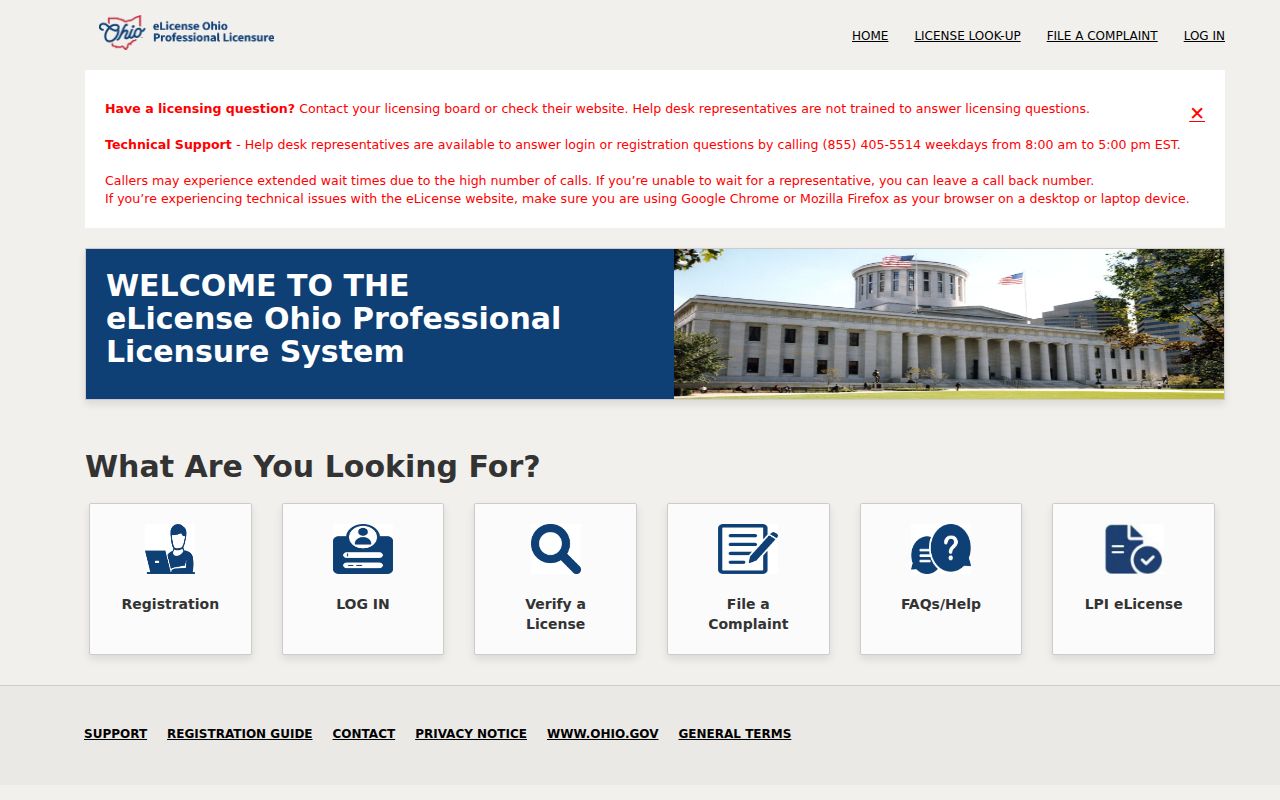
An Ohio license record confirms a credential, never a Lakewood home address. The lookup form for an individual wants a last name. It also wants a first initial plus a board. A full license number, prefix and all, works too. Each detail page lists name, status, board, and license type and number. It also shows dates, city and state, board action, and endorsements. Enter as little as possible at first. Any license city or status is an affiliation clue, nothing more. The Ohio eLicense portal appears below.
Business filings offer a parallel path. A statutory-agent listing can surface a name tied to a Lakewood entity. Still, neither a credential nor an agent entry proves residence or ownership.
Lakewood Resident Lookup Myth
A name hit in a court index or a residents directory never proves someone lives in Lakewood. It never proves anything about where they live today. Court indexes leave out sealed, expunged, juvenile, adoption, and other protected material. A city directory belongs to its publication year. Its entry may name an occupant rather than an owner. Treat every result as a dated lead. Property tax mail adds its own wrinkle. A mailing address can differ from the physical parcel address. Before concluding anything about one person, compare two independent traits. The Cuyahoga County Clerk of Courts records landing page appears below.
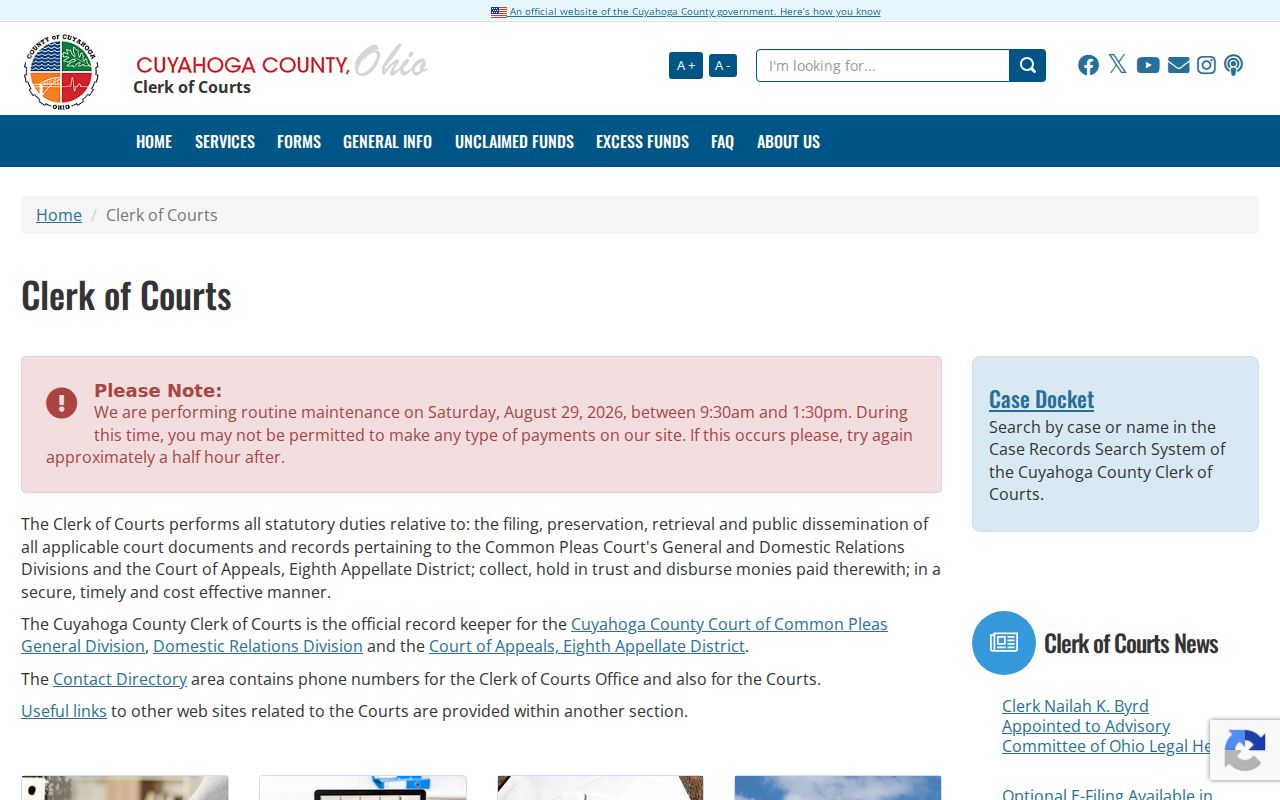
County-level court records sit with the Clerk of Courts and its divisions, while Probate operates as a separate court system with its own records office.
Lakewood Archives Research Tip
If online searching stalls, narrow the request. Cuyahoga County Archives asks mail and email researchers to state the record type, surname, and date. Include any known volume, page, or petition number too. A detailed request can take up to three weeks. The first 40 photocopies are free. For Lakewood's deeper past, the Archives, Lakewood Public Library, Cleveland Public Library, and the Lakewood Historical Society hold the directories and local newspapers. They also keep yearbooks and house-history material missing from a current online index.
Cuyahoga County Property Research lays out the Archives' source-by-era route for deeds and maps. It covers tax records and in-person work too.
Note: A precise request lets the custodian locate a record without asking it to create new research or a new compilation.
Lakewood Resident Lookup Limits
Ohio's Public Records Act, R.C. 149.43, generally promises prompt inspection and copies. It allows a reasonable time, with redaction and stated exemptions. Lakewood takes City requests through the responsible department and NextRequest. No office must build a new compilation. It need not run open-ended research either. Ask for the record group, date span, address or name, and medium. A case request goes to the court clerk, not the City portal.
Safe at Home lawfully shields a qualifying participant's address and voter registration. Ohio also sets defined redaction paths for certain personal information in internet-accessible records. No general right exists to erase an accurate public record. Ask the maintaining office about its correction process for a factual error. Keep the request and the response.
Lawful use. Use a Lakewood resident lookup for a personal, lawful purpose. Never use a record or search result to stalk, harass, intimidate, or harm another person.